
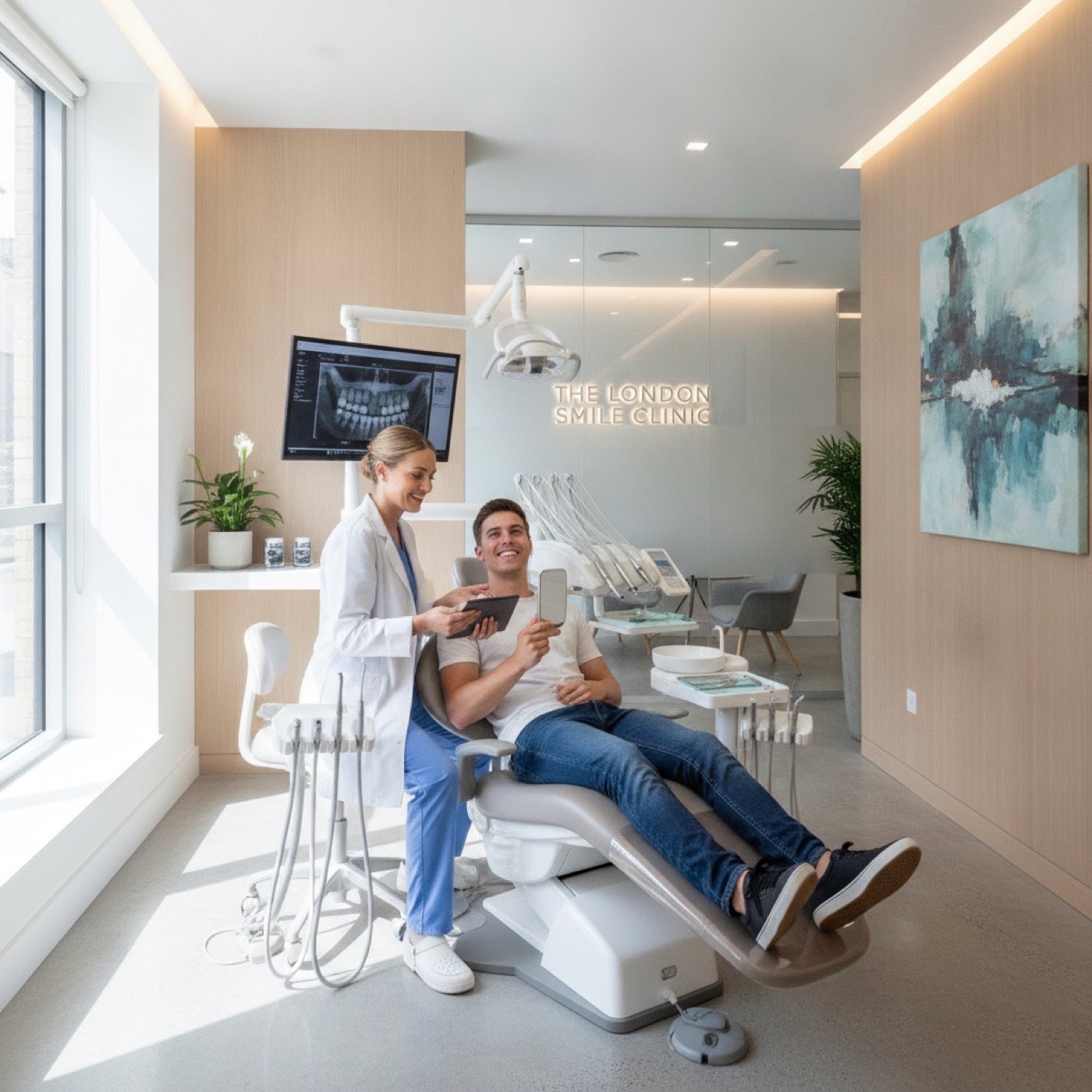
Cash advances for UK dental practices.
Funded against your private card takings, hygienist fees, cosmetic, implants, private general. Built for practices growing the private side of the business.
What MCA means for a dental practice.
Dental MCA is driven by private card takings only. NHS revenue settles through NHS Business Services Authority and does not flow through your card acquirer. So the MCA capacity is a function of your private mix, hygienist work, cosmetic (whitening, Invisalign, veneers), implants, private general treatment, and membership plans that are card-paid monthly. Practices with strong private mix borrow well; predominantly NHS practices have more limited MCA capacity. Uses: equipment upgrade (intraoral scanner, CBCT, new chairs), cosmetic services launch (Invisalign provider onboarding, whitening), practice refit, associate buy-in deposit or retention bonus, website and patient acquisition marketing.
Sound familiar?
Intraoral scanner or CBCT unit upgrade, the kit that unlocks higher-margin treatment.
Scanner £25k to £50k, CBCT £40k to £90k. Opens up implant and cosmetic work that significantly lifts case values.
MCA possible but asset finance usually cheaper for named equipment. We'll compare honestly, asset finance wins on cost most of the time for major dental kit.
Private growth push, Invisalign, whitening, membership plans launch.
Provider fees, marketing, staff training, treatment coordinator hire, £15k to £40k of investment to move the practice mix towards private.
MCA funds the pivot. Private revenue is 100% card-paid and flows directly into repayment. Clear ROI on practice mix improvement.
Practice refit or second surgery expansion.
New chair, surgery build-out, decontamination equipment, £30k to £80k.
MCA can contribute to the working capital side; for the fixed equipment element, asset finance usually prices better. Hybrid often optimal.
Here's what it actually costs.
A mid-size private-mix practice borrows £30,000 for an Invisalign launch and reception refit. Monthly private card takings: £55,000 (NHS not included). £30,000. Average monthly card takings £55,000. Fixed cost 1.22. 9% daily repayment % on card sales, total cost £6,600.
These figures are illustrative. If a term loan or asset finance fits your situation better, we'll tell you.
Open the fixed cost calculator →Work out the real cost.
New businesses typically start at a higher daily % and a shorter term.
Illustrative only, not a quote.
- Advance£30,000
- vs card takings55%
- Fixed cost1.22
- Daily repayment£163
- Avg monthly£4,950
- Est. term7.4 months
Illustrative. The fixed cost is set on day one; daily repayment varies with takings. Term capped at 18 months.
Illustrative only, not a quote. Every figure here is subject to the funder. Funders advance anywhere from 100% up to 150% of monthly card takings, so 150% is not guaranteed, and the fixed cost is not guaranteed either. Your actual advance, fixed cost and terms depend on the funder and your business profile.
Works with Dojo · Square · Zettle · SumUp · Stripe Terminal · PDQ · Yeti Pay · Teya · Barclaycard
*** THANK YOU ***
Apply with these numbersOperators we've helped.
£25,000 funded a cosmetic services launch and treatment coordinator hire, repaid in 6 months.
Illustrative composite. Three-surgery practice, £50k/mo private card takings. MCA at 1.21 factor, 10% daily repayment. Invisalign and whitening launched October, TC onboarded at same time, monthly private takings lifted around £12k within three months. Advance repaid early through growing card flow.
Illustrative composite scenarioDental practices, quick answers.
No, NHS UDAs are settled by NHSBSA into your bank account, not through your card acquirer. MCA is based only on private card takings. Practices with mostly-NHS revenue have limited MCA capacity.
Ready when you are
Ready to apply?
60 seconds to apply. 1 working day to a decision. No obligation, no credit footprint for the initial check.
Up to 90% approval for qualifying businesses